Woodworking adhesives come down to three practical questions: how strong does the bond need to be, how long do you have before the glue starts to grab, and how long does the joint need to stay clamped. For most furniture joints, a PVA wood glue (like Titebond) gives you a bond stronger than the wood itself, 5-10 minutes of open time, and needs 30 minutes to an hour in clamps before you can handle the piece safely, with a full cure taking 24 hours.
That’s the short version. If you’ve ever had a joint slip out of alignment while you fumbled for a clamp, or pulled a clamp off too early and watched the joint creep open a sixteenth of an inch, you already know why these details matter more than brand loyalty.
What makes a glue bond strong enough for furniture?
A glue bond is “strong enough” when it exceeds the strength of the wood around it — meaning the wood itself will break before the glue line fails. This is true of ordinary PVA wood glue on a well-fitted joint. Most furniture failures aren’t glue failures at all; they’re joint-fit failures, where there wasn’t enough surface contact for any adhesive to hold.
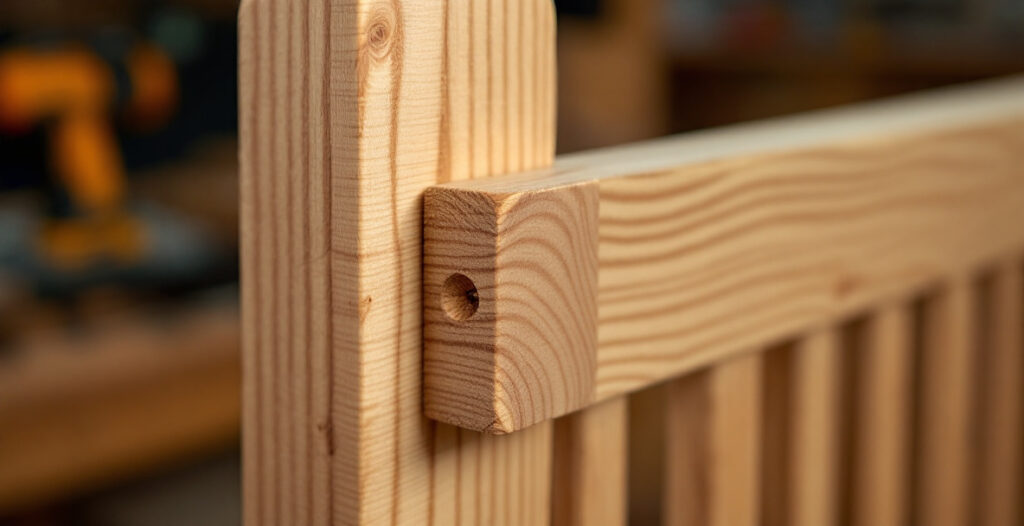
This matters because it changes where you should spend your effort. A loose mortise and tenon with a thick glue line will fail no matter what adhesive you pour into it. A tight, hand-cut joint with ordinary glue will usually outlast the rest of the piece. If your joints are gappy, the fix is better fitting, not stronger glue — see our guide on cutting a mortise by hand if that’s where the gap is coming from.
Does more glue mean a stronger joint?
No — a thick glue line is weaker than a thin one, not stronger. PVA glues are designed to cure in a thin film between two surfaces that are already in close contact. Excess glue squeezed into a loose-fitting joint just sits there as a soft layer, and that layer is the first thing to give when the joint is stressed.
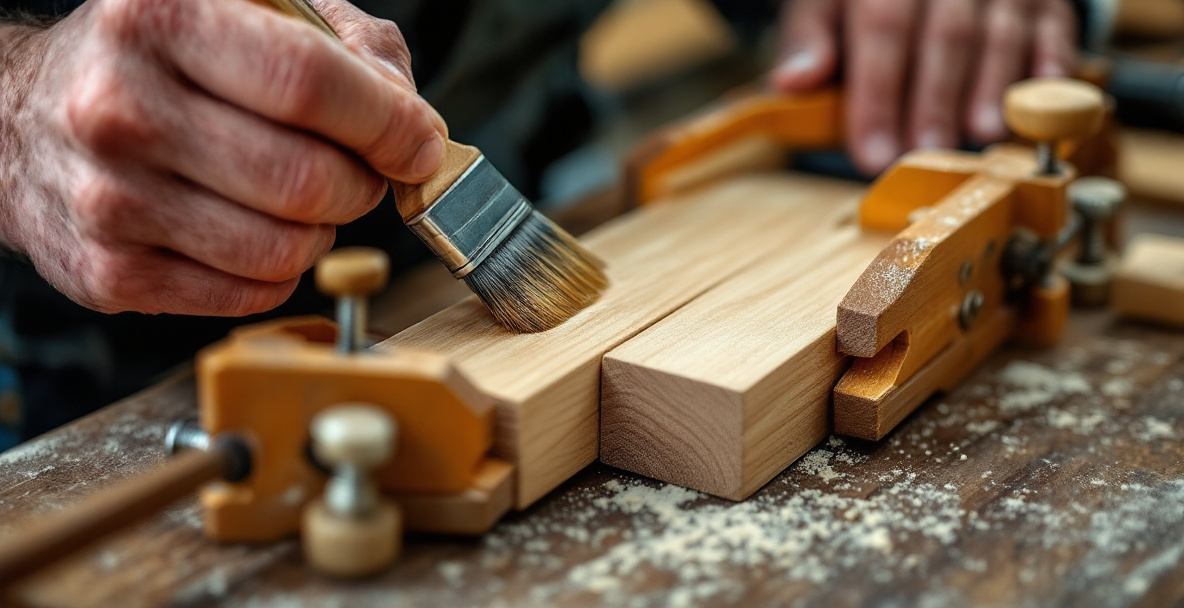
The fix is simple: mix glue application with fit. Spread a thin, even coat on both mating surfaces, clamp with enough pressure to see a small amount of squeeze-out, and wipe that excess off before it skins over.
Open time: how long you actually have to work
Open time is the window between applying glue and the point where it’s no longer workable — once it passes, you can’t adjust the joint without weakening it. Standard PVA wood glue gives you roughly 5 minutes of open time, sometimes stretched to 8-10 minutes with “extended open time” formulas. That’s not a long window if you’re assembling a multi-joint project like a stool or a small frame.
This is why dry-fitting matters more with glue than almost any other step in a build. Every joint should go together, come apart, and go together again without surprises before glue ever touches the wood. If you’re still trial-fitting after the glue is on, you’ve already eaten into your open time and the joint may partially set before it’s fully seated.
For builds with several joints — a step stool, a small frame, a crib side panel — work out your assembly order ahead of time. Know which joints go together first, have clamps pre-set to the right opening, and have a damp rag within reach for squeeze-out. None of this is glamorous, but it’s the difference between a calm glue-up and a rushed one.
What happens if glue skins over before you clamp?
Once PVA glue starts to skin, it loses tack and won’t form a proper bond even if you clamp it immediately after. The surface dries first, forming a thin film that keeps the wet glue underneath from making full contact with the other board.
If this happens, don’t try to save the joint by clamping harder. Scrape off the glue, let the wood surfaces dry, and reapply a fresh coat. It costs you a few minutes, not a ruined joint.
When to clamp, and for how long
You should clamp as soon as the joint is assembled and aligned — not after you’ve stepped back to admire it. Clamp pressure needs to be applied while the glue is still fully wet, which for PVA means within that 5-10 minute open time window. Light to moderate pressure is enough; you’re looking for a thin, even bead of squeeze-out along the joint line, not glue spraying out from excessive clamping force.
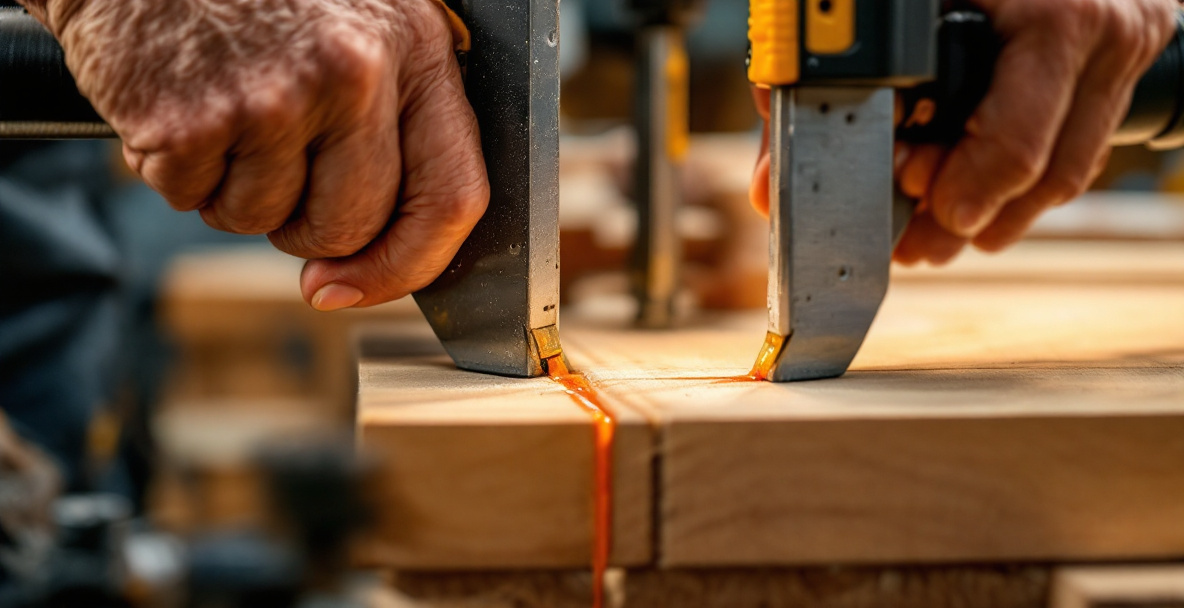
Most PVA glues reach enough strength to handle gently after about 30 minutes to an hour, but they aren’t at full strength yet. Full cure takes around 24 hours, and that’s when the joint reaches its rated strength. The practical rule: leave clamps on overnight whenever you can. If you need to unclamp sooner to free up the clamps for another joint, handle the piece carefully and avoid putting stress on that joint until the full 24 hours have passed.
Does clamp pressure matter as much as clamp time?
Yes — too little pressure leaves a glue-starved joint, and too much pressure squeezes out so much glue that you’re left with a glue-starved joint anyway. The goal is even, moderate pressure across the whole joint, not maximum force from a single clamp.
Uneven pressure is a common problem on wider glue-ups, like panels or tabletops. Use enough clamps spaced evenly along the joint, and check that the boards stay flat and flush as you tighten, not just that they’re being pulled together.
Choosing the right adhesive for the joint
For the vast majority of hand-tool furniture joints — mortise and tenon, dovetails, edge-to-edge panel glue-ups — a standard PVA wood glue is the right call. It’s affordable, it cleans up with water before it cures, it sands cleanly, and it bonds wood to wood better than almost anything else you’d reach for on a weekend project.
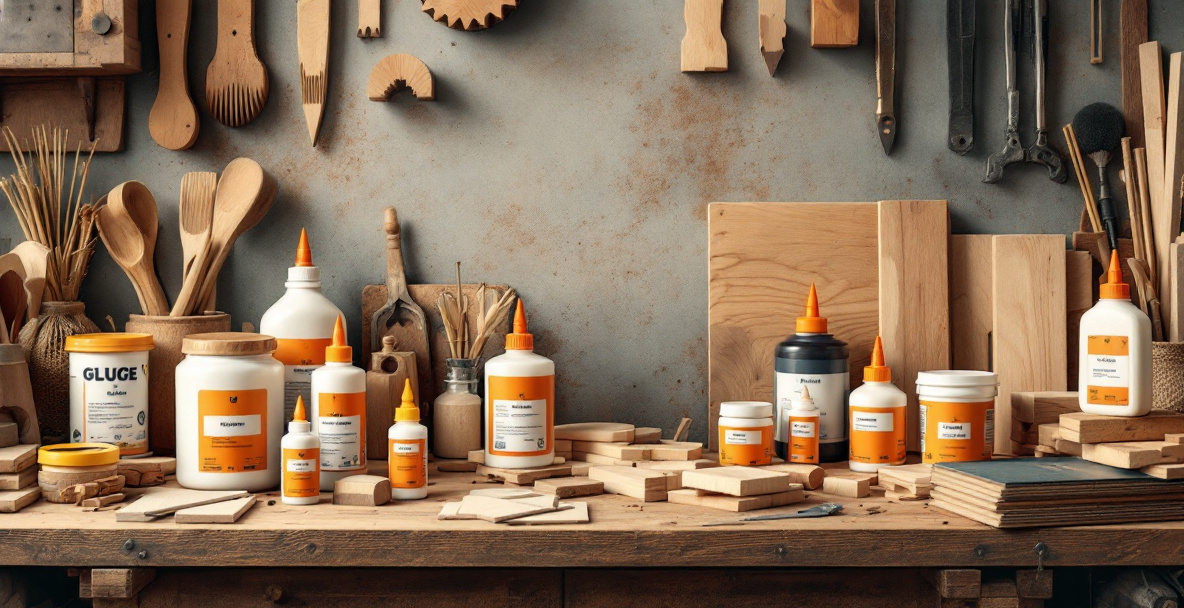
There are situations where PVA isn’t the right choice: outdoor furniture exposed to constant moisture needs a waterproof-rated formula, and repair work on old or oily wood sometimes calls for a different adhesive entirely. We go through the specific types and when to reach for each one in our guide to choosing wood glue for furniture.
If you’re building anything that lives outside, pair your adhesive choice with the right timber in the first place — some species simply don’t need as much help from glue or finish to survive the weather, which is covered in our guide to wood for outdoor furniture.
Do you need a waterproof glue for outdoor pieces?
Yes, if the piece will be rained on or sit in damp conditions regularly, a waterproof-rated PVA (often labeled Type III or exterior-grade) is worth the small price difference over standard indoor glue. Standard interior PVA will soften and fail with repeated moisture exposure over time.
For anything indoors — a crib, a bed frame, a step stool, shelving — standard PVA is fine and there’s no need to pay more for exterior ratings you won’t use.
A few practical habits that matter more than product choice
Store glue somewhere that doesn’t freeze. PVA wood glue is water-based, and a hard freeze can break the emulsion permanently, leaving you with a bottle of useless, chunky liquid. A shed or unheated garage in winter is exactly the kind of place this happens.
Check the bottle’s age before a big glue-up. Old PVA glue thickens and loses adhesive strength well before the “best by” date on some bottles, particularly if it’s been opened and closed repeatedly. If it’s gone noticeably thicker or stringy, don’t trust it on a joint that matters.
Keep a damp rag and a clamp or two within arm’s reach before you even open the glue bottle. The actual gluing-and-clamping sequence of a joint often takes under a minute from first application to final clamp tightening — it’s not the moment to be walking across the shed looking for a rag.
Often Asked Questions
Can you re-glue a joint that’s already failed once?
Yes, but clean it properly first. Scrape or sand off all the old dried glue from both surfaces — old glue won’t bond well to fresh glue, and a joint reglued over old residue will fail again in the same spot. Once both surfaces are bare wood again, treat it as a fresh glue-up.
Is wood glue stronger than screws for furniture joints?
For a well-fitted joint, a PVA glue bond is generally stronger than a single screw at resisting the kind of stress furniture joints see day to day, because the glue bonds across the entire contact surface rather than a single point. Screws are still useful for extra mechanical security or where clamping isn’t practical, but they shouldn’t replace a well-fitted glued joint.
How long does wood glue actually last in the bottle?
Most PVA wood glue lasts 1-2 years unopened in reasonable storage conditions, and somewhat less once opened and exposed to air repeatedly. Titebond lists shelf life guidance directly on their product listings, and the general advice holds across most PVA brands.
Can you speed up glue curing time?
Not safely, no. Warmer room temperature (around 70°F/21°C) helps glue cure at its normal expected rate, but there’s no reliable way to rush a full cure without compromising bond strength. If you’re on a deadline, plan your glue-ups early enough in a project that the 24-hour cure window doesn’t become a bottleneck.
Does sanding before gluing help or hurt the bond?
It helps, within reason. A surface that’s been freshly planed or lightly sanded bonds better than one that’s old, oxidized, or glazed from a dull blade. Avoid sanding to a very fine grit right before gluing — a slightly open grain actually gives glue more surface to key into than a polished one.