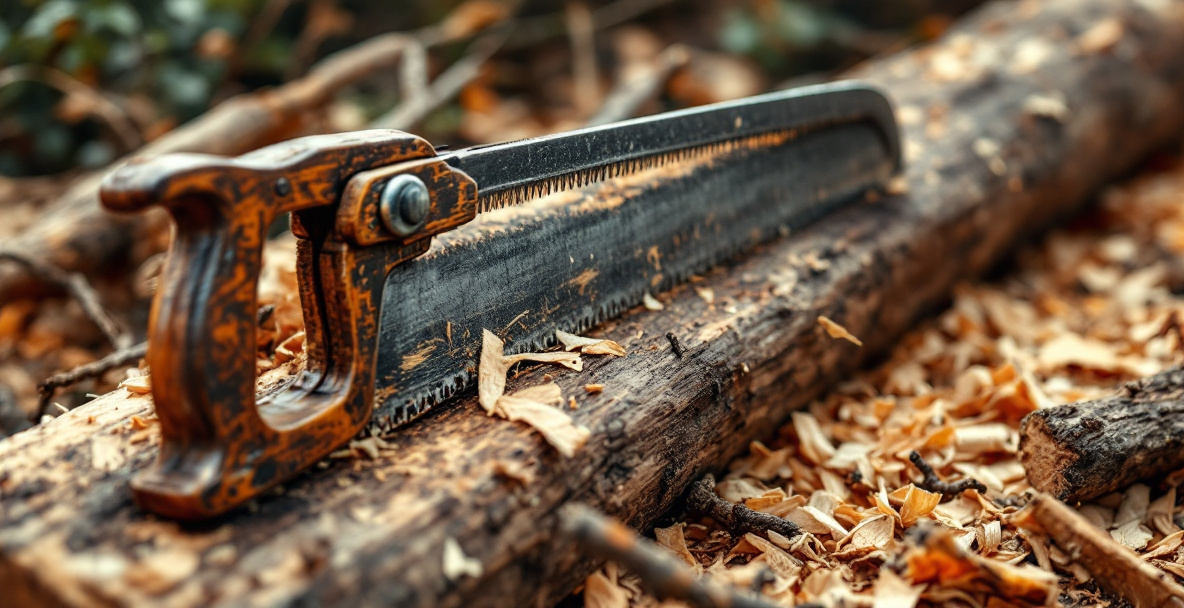
A bowsaw is a hand saw with a thin, replaceable blade held under tension by a frame — usually a wooden or metal H-shape with a twisted cord or metal rod that tightens the blade. The tension keeps the narrow blade from buckling or wandering as you cut, which makes the bowsaw good at fast, controlled crosscuts through green wood, branches, and small logs. It’s one of the simplest saws to learn and one of the cheapest to buy secondhand.
If you’ve only ever used a panel saw or a circular saw, the bowsaw takes some getting used to. It cuts on the push stroke in most designs, it wants to be pulled through the wood rather than forced, and it rewards a steady rhythm more than muscle. None of that is complicated. It just isn’t intuitive the first time you pick one up.
What is a bowsaw actually used for?
A bowsaw is built for crosscutting — cutting across the grain — on green or seasoned wood, particularly round stock like branches, saplings, and small logs. It’s the tool you reach for when you’re bucking firewood to length, trimming a log for a stool blank, or taking a branch down to a workable section before you start shaping it with other tools.
It is not a precision joinery saw. The blade is coarse, the kerf is wide, and the teeth are set for speed, not finish. If you need a clean, straight cut for a tenon shoulder, use a backsaw. If you need to break down round green wood fast, the bowsaw is the right tool, and often the only one you actually need for that job.
How is a bowsaw different from a bucksaw?
The terms get used almost interchangeably, and in practice there’s a lot of overlap. A bucksaw traditionally refers to a larger frame saw designed specifically for bucking logs to length, often with a fixed or pinned blade, while “bowsaw” more commonly describes the lighter, tensioned-frame version with a twist-stick or wingnut tensioner that’s sold in most hardware stores today. Wikipedia’s entry on the bucksaw covers the historical distinction in more detail if you want the full lineage. For a beginner buying one tool, the practical difference is small — look for a tensioned blade and a frame that fits your hand.
Choosing a bowsaw: what to actually look for
A good beginner bowsaw needs three things: a tensioning mechanism that actually tightens, a blade in good condition, and a frame length that matches what you’ll cut. Beyond that, you don’t need much.
Blade length typically runs from about 15 inches for a light pruning-style bowsaw up to 30 inches or more for bucking larger logs. For general green-wood crosscutting around a small shop or yard — branches, saplings, stool legs, firewood rounds — something in the 21 to 24 inch range covers most jobs without being unwieldy.
Replacement blades are cheap and widely available, which matters more than almost anything else on this tool. A bowsaw with a dull or damaged blade is useless, but a bowsaw is also one of the few saws where swapping the blade is a two-minute job with no sharpening skill required. That’s worth knowing before you spend money chasing a “better” saw — often you just need a new blade.
Is it worth buying a secondhand bowsaw?
Yes, and it’s often the better option. Old bowsaw frames are usually just as functional as new ones — the frame does almost nothing except hold tension, so there’s little to wear out. Check that the frame isn’t cracked or badly warped, that the tensioning stick or rod still turns freely, and plan to fit a fresh blade regardless of what comes with it. A secondhand frame plus a new blade usually costs less than a new saw of similar quality, and performs the same.
How do you use a bowsaw step by step?
Using a bowsaw well comes down to tensioning the blade properly, starting the cut with control, and then letting the length of the blade do the work on full, even strokes. Rushing the start is where most beginners go wrong.
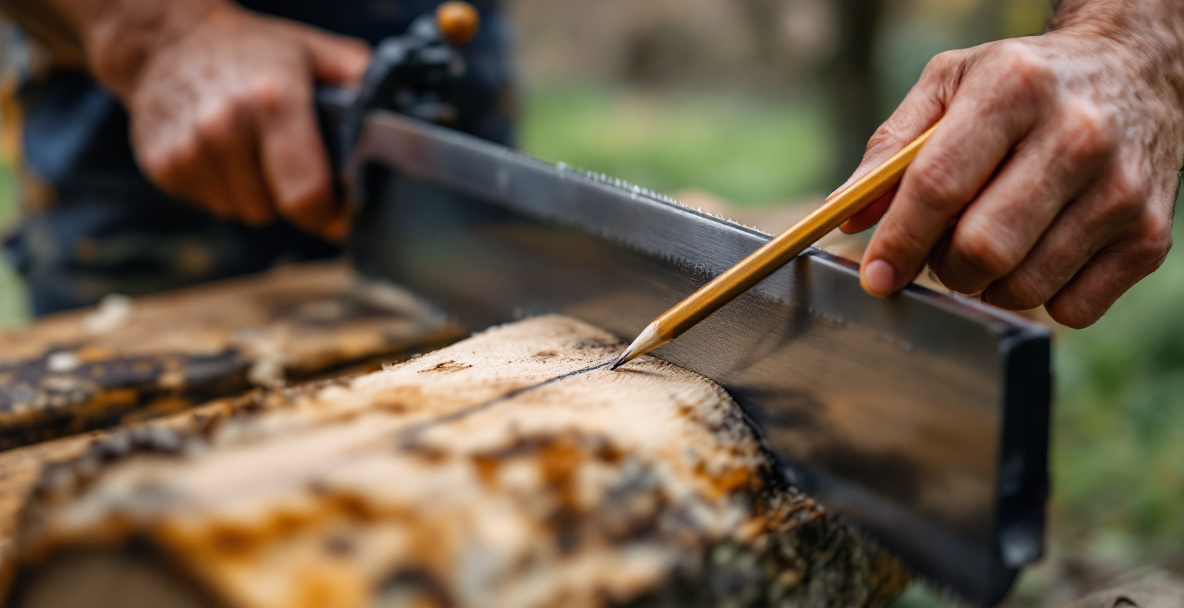
1. Tension the blade. Twist the tensioning stick (or tighten the wingnut, depending on your saw) until the blade feels rigid and gives a faint ping when flicked. A loose blade will wander, bind, and bend — tension is not optional on this saw, it’s the entire design.
2. Mark your cut line. A pencil line is enough for firewood or rough work. For anything going into a furniture project, a scored line from a marking knife gives you a cleaner starting point and stops the blade skating off the mark.
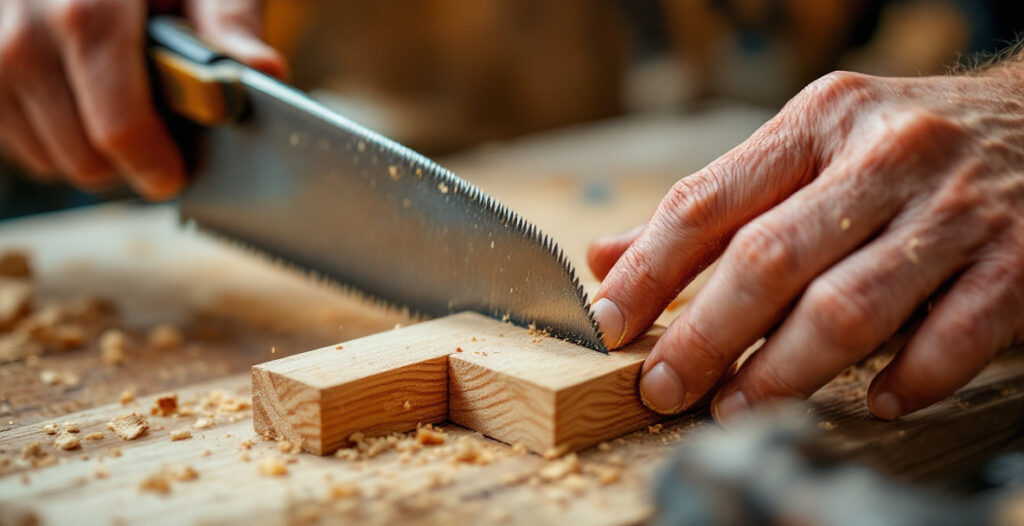
3. Start the kerf slowly. Rest the blade on the line at a shallow angle and draw it back a few times without much pressure to establish a groove. Starting fast is how the blade jumps the line.
4. Cut with long, full strokes. Once the kerf is established, use the full length of the blade on each stroke — short, choppy strokes wear one section of teeth and slow you down. Let the saw’s weight and the blade’s bite do the cutting; don’t force it.
5. Support the offcut. On branches and logs, the piece you’re cutting off can pinch the blade as it drops. Support it with your free hand or a block so it doesn’t bind the blade near the end of the cut.
What’s the right stance and grip?
Stand with the work stable and low enough that you’re not sawing above waist height, and keep the saw stroke moving in a straight line rather than rocking side to side. Grip the handle naturally — most bowsaw handles are shaped for a relaxed hold, not a death grip. A tense grip tires your forearm fast and doesn’t improve accuracy; the tension in the blade is doing the precision work, not your hand.
Working with green wood specifically
Green wood cuts faster and easier than seasoned wood because it hasn’t dried and hardened yet, which is exactly why the bowsaw suits it so well. The trade-off is that green wood is wetter and more fibrous, so the blade can gum up with sap faster than on dry stock — wipe the blade down occasionally on resinous species.
If you’re cutting green branches or logs down for a future project — stool legs, chair stretchers, anything you plan to let dry before building — cut your pieces a bit longer than the final size. Green wood moves as it dries, and you’ll want the extra length to trim back to true once it’s stabilized.
Common bowsaw mistakes beginners make
Most bowsaw problems trace back to one of three things: a slack blade, forcing the cut, or using it for a job it’s not built for.
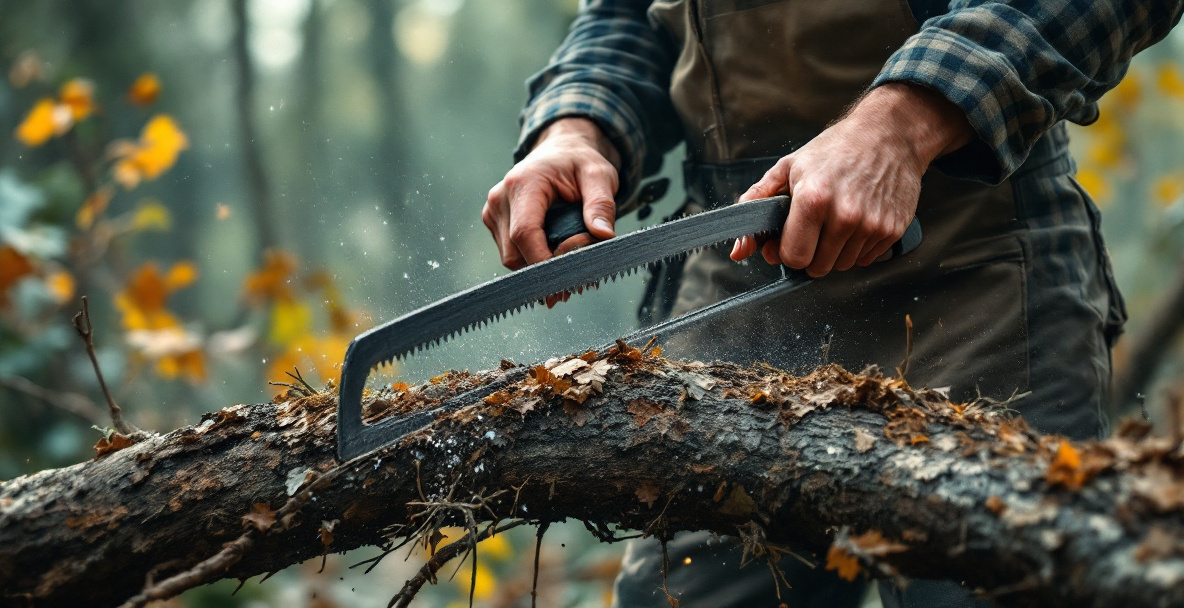
A slack blade wanders off the line and binds in the kerf, which beginners often misread as “this saw is bad” when it’s actually just under-tensioned. Forcing the saw — pushing hard instead of letting long strokes do the work — tires you out fast and doesn’t speed up the cut; bowsaws cut on technique, not force. And using a bowsaw for fine joinery work, where a backsaw or a coping saw is the better tool for curves and tight corners, just leaves you with a rough cut you then have to clean up by hand anyway.
Popular Woodworking’s guide on how to Popularwoodworking covers blade tensioning and frame types in more depth if you want to go further into the mechanics of different frame styles.
Maintaining a bowsaw
Maintenance is minimal: keep the blade tensioned when in use and slackened slightly for long-term storage, wipe sap and moisture off after cutting green wood, and replace the blade rather than trying to sharpen it — most bowsaw blades are hardened and not meant to be filed by hand. If the frame picks up surface rust from damp storage, the same methods used on any secondhand hand tool apply; see our guide on removing rust with white vinegar if the frame needs cleaning up.
Frequently Asked Questions
Can a bowsaw cut seasoned, dry wood?
Yes, but it’s slower and more tiring than cutting green wood, and the blade dulls faster in hard, dry stock. A bowsaw will get through seasoned wood fine for occasional crosscuts, but if that’s most of your work, a panel saw or crosscut saw is better suited to it.
Does a bowsaw cut on the push or pull stroke?
Most bowsaws are set up to cut on the push stroke, though this depends on how the blade is mounted — some can be flipped to cut on the pull. Check your specific saw; the teeth will be angled toward the cutting direction.
How often do I need to replace a bowsaw blade?
There’s no fixed interval — it depends on how much you use it and what you’re cutting. A blade that’s visibly dull, missing teeth, or no longer tracking straight needs replacing. For occasional use, a blade can last a long time; for regular firewood processing, expect to swap it more often.
Can I use a bowsaw instead of a chainsaw?
For small branches and saplings, yes. For larger logs or heavy-volume work, a bowsaw is slower and more physically demanding, but it’s quieter, needs no fuel, and costs almost nothing to maintain — a reasonable trade for small-scale, occasional cutting.
Is a bowsaw good for beginners?
Yes — it’s one of the simpler saws to learn, cheap to buy secondhand, and forgiving of imperfect technique as long as the blade is properly tensioned. It’s a sensible first crosscut saw for anyone building up a small hand-tool kit on a budget.