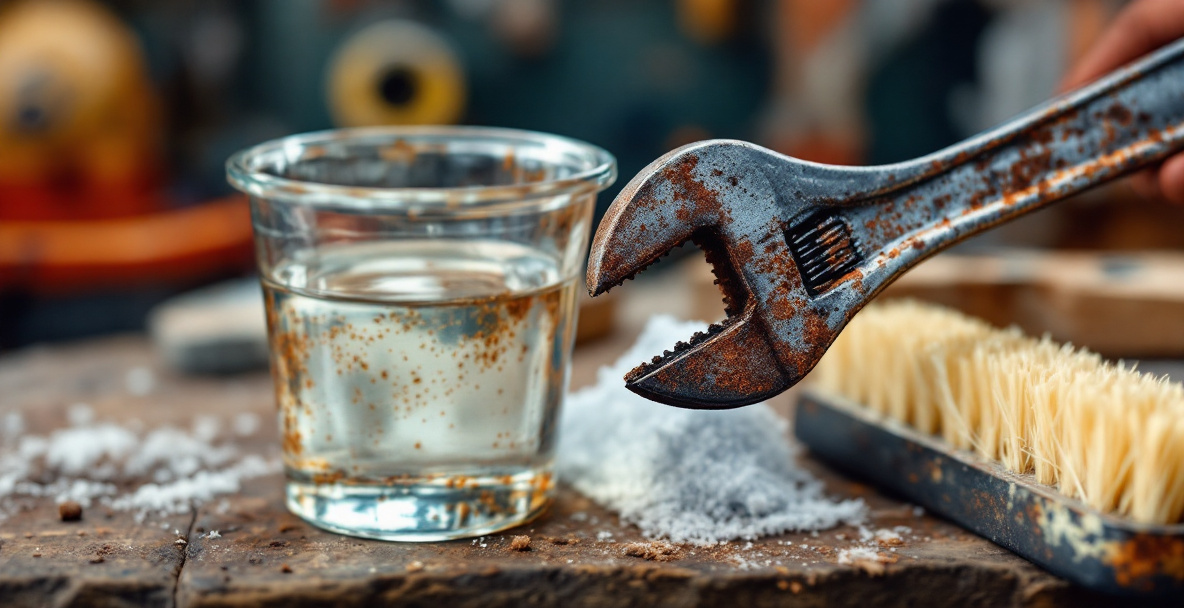
If you want to remove rust from tools, you have four real options: an acid soak (white vinegar or citric acid), mechanical abrasion (sandpaper, steel wool, or a wire wheel), electrolysis (a low-voltage bath that lifts rust off with a battery charger), or a commercial rust remover gel. Each works. None is universally “best” — the right one depends on how much rust you have, how much time you’ve got, and whether the tool is plain steel or has a finish worth protecting.
This isn’t a single-method tutorial. It’s a comparison, so you can pick the right tool for the job in front of you instead of just copying whatever method you read first.
What actually causes rust on tools, and why it matters for removal
Rust is iron reacting with oxygen and moisture to form iron oxide, and it spreads faster in damp, unventilated storage — which describes a lot of sheds and garages. That’s worth knowing because it shapes which removal method makes sense: light surface rust from a humid week in storage is a different job from deep pitting on a tool that sat in a wet basement for a decade.
Surface rust is mostly cosmetic and comes off with light abrasion or a quick vinegar soak. Pitting means the rust has eaten into the metal itself, leaving craters that no amount of cleaning will fill back in — at that point you’re removing rust to stop it spreading, not restoring a smooth surface. Knowing which one you’re dealing with saves you from overworking a tool that needed five minutes, or underworking one that needed an overnight soak.
There’s a middle category worth naming too: flash rust, the thin orange film that appears on bare steel within hours of exposure to air or moisture, often right after cleaning. It looks alarming but wipes off easily with a cloth and a drop of oil — it hasn’t had time to etch the metal yet. If you see rust reappear almost immediately after you thought you’d finished, that’s usually what you’re looking at, and it’s a sign you skipped the drying-and-oiling step rather than a sign your removal method failed.
Comparing the four methods to remove rust
Here’s the short version before the detail: vinegar is cheapest and best for light-to-moderate rust but takes time. Abrasion is fastest for small, visible spots but risks removing metal unevenly. Electrolysis is the most thorough for badly rusted tools but needs setup and a power source. Commercial removers are convenient but cost money for something vinegar often does just as well.
| Method | Best for | Time needed | Equipment |
|---|---|---|---|
| Vinegar/acid soak | Light-to-moderate rust, preserving finish | Hours to overnight | Container, vinegar |
| Abrasion | Small visible spots, quick fixes | Minutes | Sandpaper, steel wool, wire wheel |
| Electrolysis | Heavy rust, tight corners, neglected tools | 1-24 hours | Tub, charger, washing soda, scrap metal |
| Commercial remover | Speed, convenience | Minutes to an hour | Gel/spray, rinse water |
Vinegar and acid soaks
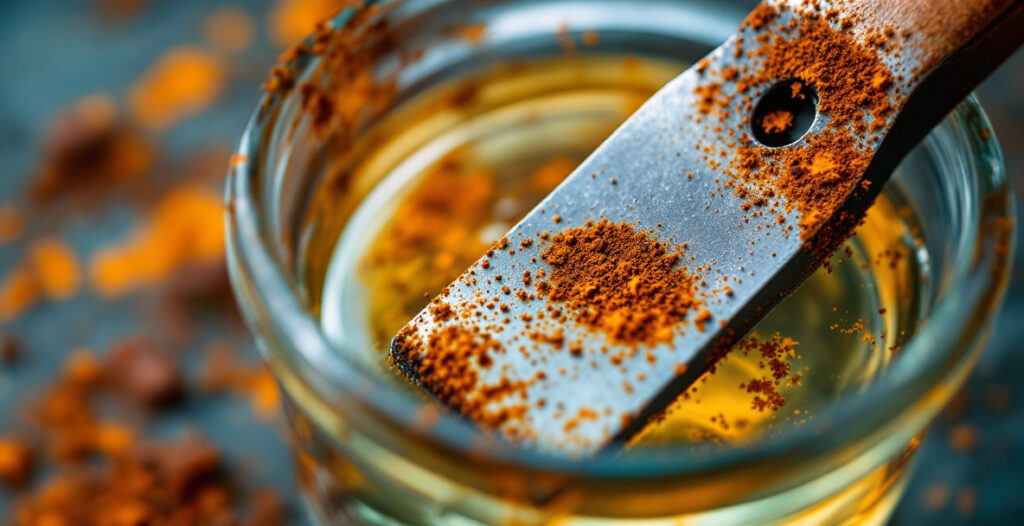
Soaking in white vinegar dissolves rust through acetic acid, which reacts with iron oxide without attacking the base metal nearly as aggressively. It’s slow — usually several hours to overnight — but it’s cheap, low-effort, and gentle enough to use on tools you don’t want to over-abrade.
This is the method most beginners should start with, because it requires no special equipment beyond a container and some vinegar from the kitchen. We’ve covered the soak-and-scrub method in detail, including soak times for light versus heavy rust.
Sanding and abrasive methods
Sandpaper, steel wool, and wire brushes remove rust by physically grinding it off, and they’re the fastest option for a tool you need back in use today. The tradeoff is control: abrasion can leave uneven patches, round over sharp edges, or scratch a surface that was otherwise fine.
Abrasion works best on flat surfaces and small rust spots rather than pitted corners or threaded parts, where a brush can’t reach evenly. For a full breakdown of grits and technique, see the guide to sanding and abrasive rust removal.
Electrolysis
Electrolysis removes rust using a weak electrical current run through a water-and-washing-soda bath, which pulls rust off the tool and deposits it on a sacrificial piece of scrap metal. It’s the most thorough method for heavily rusted tools, including ones with rust in tight corners or hard-to-reach joints that abrasion and soaking can’t fully clean.
It takes more setup — a plastic tub, a battery charger, washing soda, and a scrap steel anode — and it’s overkill for a tool with a little surface haze. But for a badly neglected secondhand chisel or plane body, it often outperforms both soaking and sanding. Full steps, including safety notes on the current and setup, are covered in our guide to methods beyond vinegar soaking.
Commercial rust removers
Commercial gels and sprays use phosphoric or other acids to convert or dissolve rust, often working faster than a vinegar soak. They cost more than vinegar for roughly the same chemistry, and some leave a residue that needs rinsing or neutralizing before you can oil the tool.
They’re worth having around if you want speed and don’t mind the cost, but for most hobbyists working through a box of secondhand tools, vinegar does the same job for less money.
How to remove rust from tools step by step (general process)
Regardless of method, the general process is the same: identify how deep the rust goes, choose a method matched to that severity, apply it, then dry and oil the tool immediately afterward. Skipping the last step is the most common mistake — bare steel starts rusting again within hours in damp air.
- Wipe off loose dirt and surface debris before treating the rust itself.
- Choose your method based on severity: vinegar or commercial gel for light-to-moderate rust, abrasion for localized spots, electrolysis for heavy or deep rust.
- Dry the tool thoroughly and immediately — don’t let it air-dry slowly.
- Apply a light coat of oil to bare metal to prevent flash rust from reappearing within the day.
That last point matters more than people expect. A tool that looks clean and dry can have a fine film of moisture left in pores and corners, and bare steel has no protection against it.
Preventing rust from coming back
Removing rust once is only half the job — the real goal is making sure you’re not repeating the process every few months. A thin coat of light machine oil, paste wax, or even plain mineral oil on bare metal creates a barrier against moisture, and it takes seconds to apply after each use. Tools that see regular use tend to stay rust-free simply because handling and friction keep a film of oil moving over the surface; it’s the tools that sit untouched for months that come back rusted.
Storage matters just as much as the oil coat. A damp shed, a toolbox left on a concrete floor, or a drawer near a humid window all accelerate rust regardless of how well you cleaned the tool beforehand. Silica gel packs in a toolbox, a dehumidifier in a larger shed, or simply storing tools off the ground and away from exterior walls all reduce how often you’ll need to repeat this whole process. If you’re restoring a batch of secondhand tools at once, it’s worth fixing the storage problem before you finish cleaning the last one — otherwise you’re just resetting the clock on the same cycle.
Which method should you actually use?
For most hobbyists with a handful of secondhand tools and no rush, start with a vinegar soak — it’s the cheapest, gentlest, and requires nothing you don’t already own. Reach for abrasion only when you need a quick fix on a small, visible spot, and save electrolysis for tools bad enough that soaking alone won’t cut it.
Don’t reach for a commercial remover first just because it’s sold as the “proper” product. In most cases it’s the same acid chemistry as vinegar at a higher price, and the extra speed rarely matters for a tool sitting in a shed over a weekend.
Can you remove rust and still keep the tool’s original finish?
Mostly no, not if the rust has gone past surface haze — any method aggressive enough to remove real rust will also remove whatever original finish or patina was underneath it. If a tool has light surface rust over otherwise intact bluing or japanning, a gentle vinegar soak and hand-wiping is your best shot at preserving what’s left.
Once rust has pitted the surface, there’s no finish left to save in that spot regardless of method — the goal shifts from preservation to stopping further damage. This is one reason secondhand tools vary so much in value: a clean, lightly-rusted plane iron is worth more effort to preserve carefully than a deeply pitted one, which is better off just cleaned, sharpened, and put back to work. For more on sourcing and judging secondhand tools before you even get to the rust stage, see our guide to starting tools on a budget.
For a visual walkthrough of rust treatment that covers both chemical and mechanical approaches side by side, this rust removal video is a useful companion to the steps above.
FAQ
What removes rust the fastest?
Abrasion (sandpaper, steel wool, or a wire wheel) is the fastest method for visible, localized rust, often taking just a few minutes. It’s not the gentlest option, though, and can leave uneven or scratched surfaces if used carelessly.
Does vinegar really remove rust from tools?
Yes. The acetic acid in white vinegar dissolves iron oxide over a soak of several hours to overnight, and it’s gentle enough not to aggressively attack the surrounding metal. It’s slower than abrasion or commercial products, but it’s cheap and widely available.
Is it safe to use a wire wheel on old chisels or plane irons?
It’s safe for the body of the tool, but avoid running a wire wheel over the cutting edge itself — it can remove metal unevenly and ruin the geometry you’ll need for sharpening afterward. Clean the body with abrasion, then sharpen the edge separately with proper stones.
Will rust come back after you remove it?
Yes, almost immediately, if you don’t dry and oil the tool right after cleaning. Bare steel exposed to any humidity will start forming surface rust again within hours, so oiling is not optional — it’s the last step of the job, not an afterthought.
Should you remove all rust before sharpening a tool?
Yes, at least from the blade and any surface the sharpening stone will contact, since rust pits can interfere with getting a clean, even edge. Light surface rust elsewhere on the tool can wait, but the cutting edge should be clean metal before you start honing it.