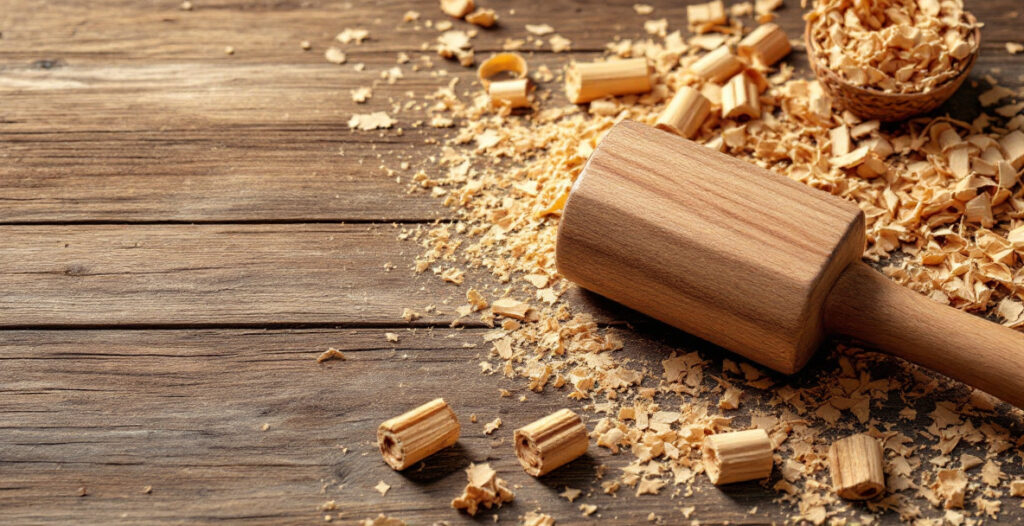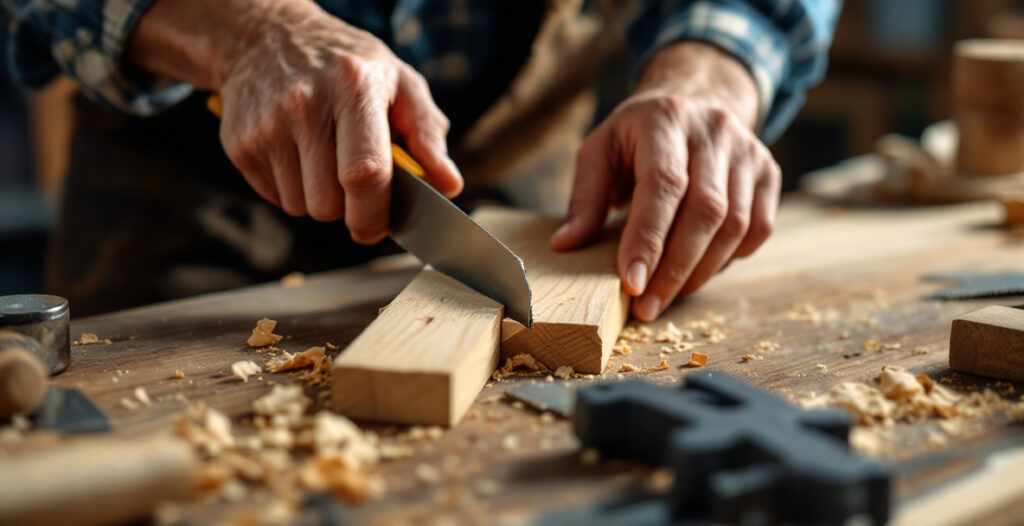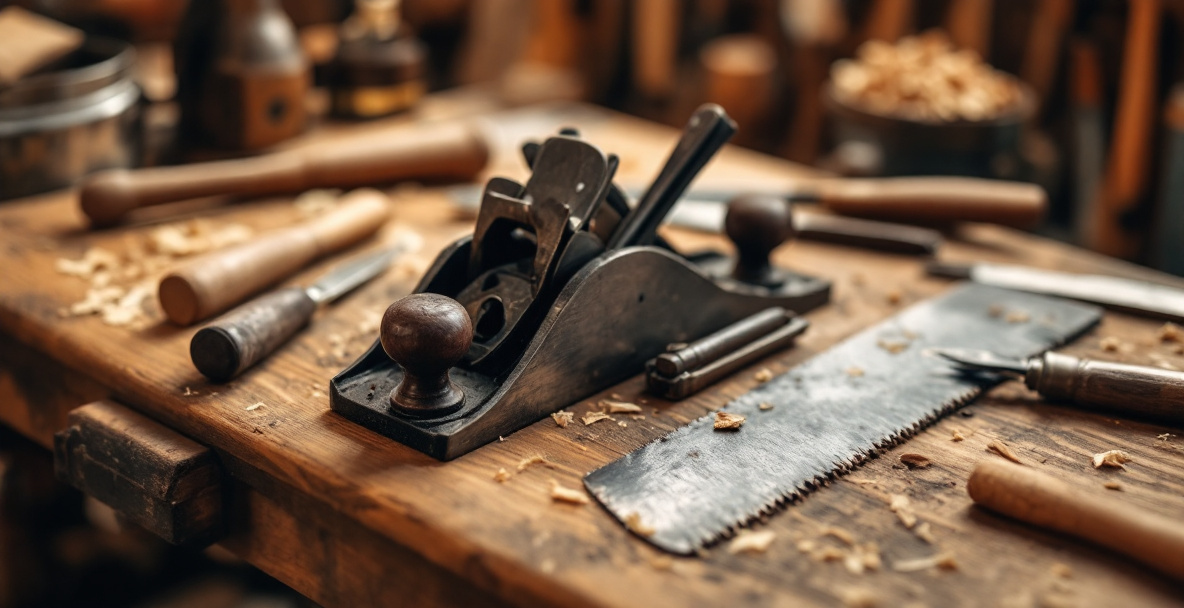
A solid set of woodworking starter tools for hand-tool work includes a jack plane, a backsaw (dovetail or tenon saw), a set of two to four chisels, a mallet, a marking knife, a combination square, and a sharpening stone. That’s it. You don’t need a table saw, a planer, or dust extraction to build real furniture. You need maybe eight tools, most of which can be bought secondhand for less than one new power tool would cost.
This checklist assumes no workshop, no machines, and a budget that doesn’t stretch to new catalog prices. It’s built for a shed, a garage corner, or a shared basement — the same constraints our readers actually work within.
What tools do you actually need to start woodworking by hand?
The honest minimum is a plane, a saw, chisels, a mallet, a marking tool, a square, and something to sharpen with. Everything else — spokeshaves, bow saws, marking gauges — makes certain jobs easier but isn’t required to cut your first joint or build your first stool.
If you’re starting from zero, resist the urge to buy a full kit at once. Buy enough to finish one project, use it, and let the next tool purchase be dictated by a problem you actually hit — not a list someone else made.
The plane: your most-used tool
A jack plane (a #5 or similar) does more work than any other single tool in a hand-tool kit. It flattens boards, squares edges, and smooths surfaces before finishing. A secondhand cast-iron jack plane from a flea market or online auction, cleaned up and sharpened, performs identically to a new one costing three or four times as much.
If you’ve never used one, start with our guide to using a hand plane before you buy — it’ll tell you what to look for in a usable secondhand example versus one that’s junk.
Saws: one crosscut, one joinery saw
You need two saws minimum: something for rough crosscutting and a backsaw for joinery. A panel saw or a bowsaw handles breaking down stock, while a dovetail or tenon saw gives you the straight, controlled cuts that joints depend on. Trying to cut a mortise shoulder with a general-purpose saw is how beginners end up with gappy joints.
Chisels: fewer, sharper, better
Two to four chisels — commonly 1/4″, 1/2″, and 3/4″ — cover the vast majority of beginner joinery. A drawer full of twelve dull chisels is worse than three sharp ones. Buy secondhand, flatten the backs, and learn to sharpen before you learn much else; a dull chisel makes every technique look harder than it is.
Marking and measuring tools
A combination square, a marking knife, and a marking gauge let you lay out joints accurately before you cut them. A marking knife cuts a fine line into the wood fibers instead of smudging graphite across the surface, which matters once you’re chiseling to a line. See our marking knife guide for how this differs from pencil layout in practice.
How much does a basic woodworking starter kit cost?
A functional secondhand starter kit — plane, two saws, three chisels, mallet, marking knife, square, and a stone — typically runs well under what a single new power tool costs, often assembled piece by piece over a few months rather than bought all at once. Buying new multiplies that cost several times over for the same functional capability.
The price spread is wide because condition and sourcing matter more than brand. A rusted plane with a sound sole and iron can cost next to nothing at a yard sale and work as well as one bought new for far more, once it’s cleaned up and sharpened. Full guidance on selecting and budgeting for these first purchases is in our essential tools to start woodworking guide.
Why secondhand tools are usually the better option
Secondhand hand tools are often better value than new ones because older tools were frequently made with heavier castings and better steel than modern budget lines, and price depreciation means you’re paying for use, not novelty. The tradeoff is rust, missing parts, and the work of restoring them — which is real labor, but not skilled labor.
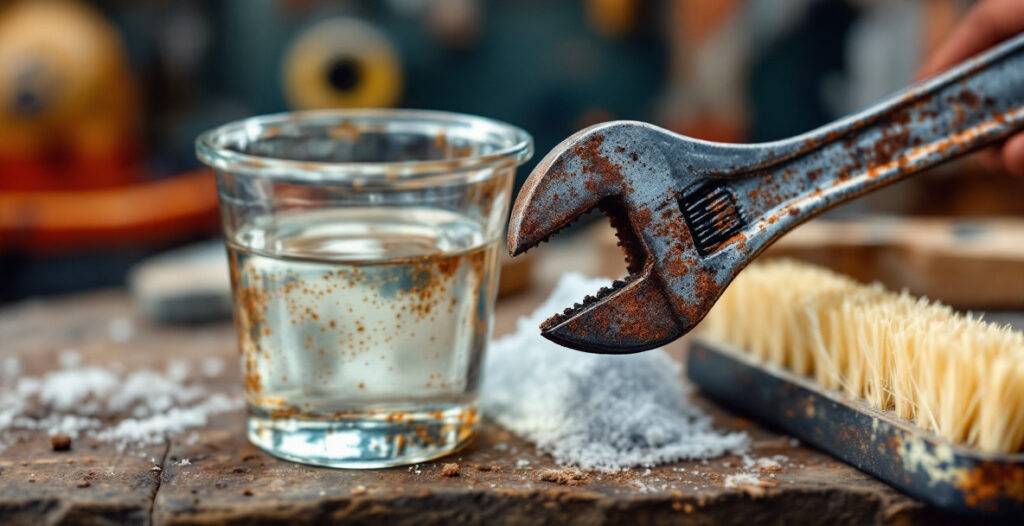
Rust on a plane sole or chisel back is almost never a reason to walk away from an otherwise sound tool. It’s cosmetic and mechanical, not structural, in the vast majority of cases. If you pick up a rusted-but-solid tool, our rust removal comparison covers which method fits which situation, from soaking to abrasion.
Sharpening: the tool behind every other tool
A sharp edge matters more than any single tool purchase on this list, because a dull plane or chisel will make you think the technique is wrong when the problem is the edge. You need a stone (oil or water), some way to hold a consistent angle, and the willingness to stop and sharpen often.
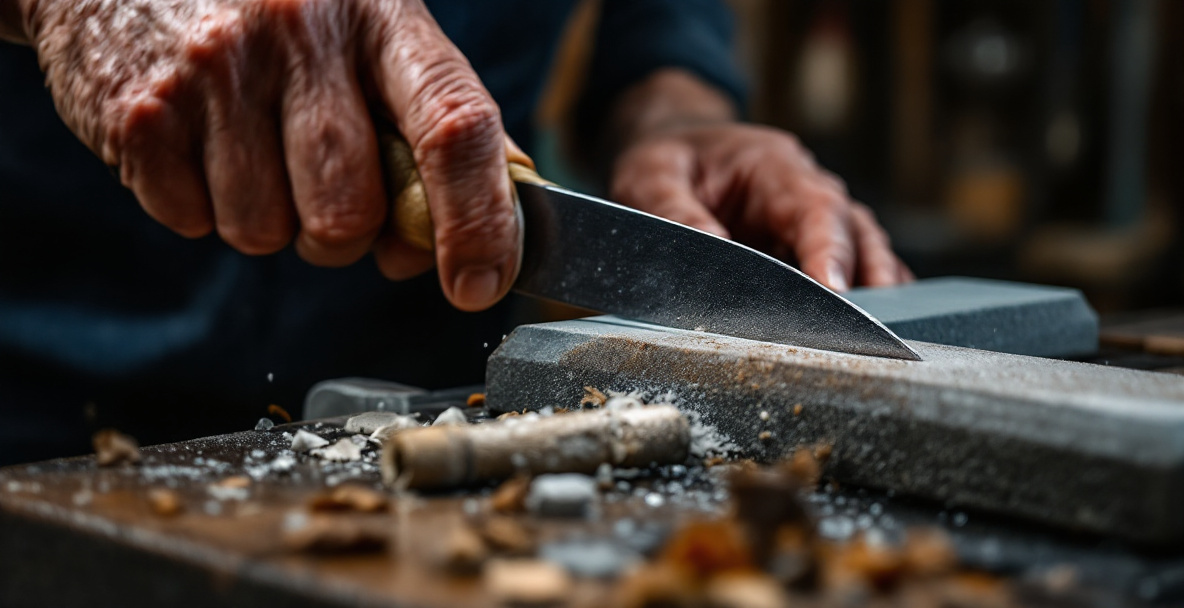
Budget waterstones in a couple of grits — one coarse, one fine — are enough to start. You don’t need a honing guide, a strop, and four grits of stone before you cut a single joint. Our sharpening stone buyer’s guide walks through what’s actually worth buying at the beginner stage versus what’s a later upgrade.
Should beginners buy a full tool set or build one piece by piece?
Build it piece by piece. A boxed “starter set” sold as a bundle often includes tools of inconsistent quality — a decent chisel paired with a mediocre plane — because the set is priced to a point, not built to a standard. Buying individually lets you put money where it matters (the plane, the chisels) and spend less on things that matter less (a basic square, a cheap mallet).
This also matches how most hobbyists actually learn: one tool, one skill, one project at a time. You don’t need to own a full joinery kit before you’ve cut your first mortise.
What’s the first project to build with a starter tool kit?
A step stool or a small wooden crate is the standard first project, because both use the full range of starter tools — planing, sawing, chiseling, and marking — without demanding advanced joinery. Both can realistically be finished in a weekend with the eight-tool kit above.
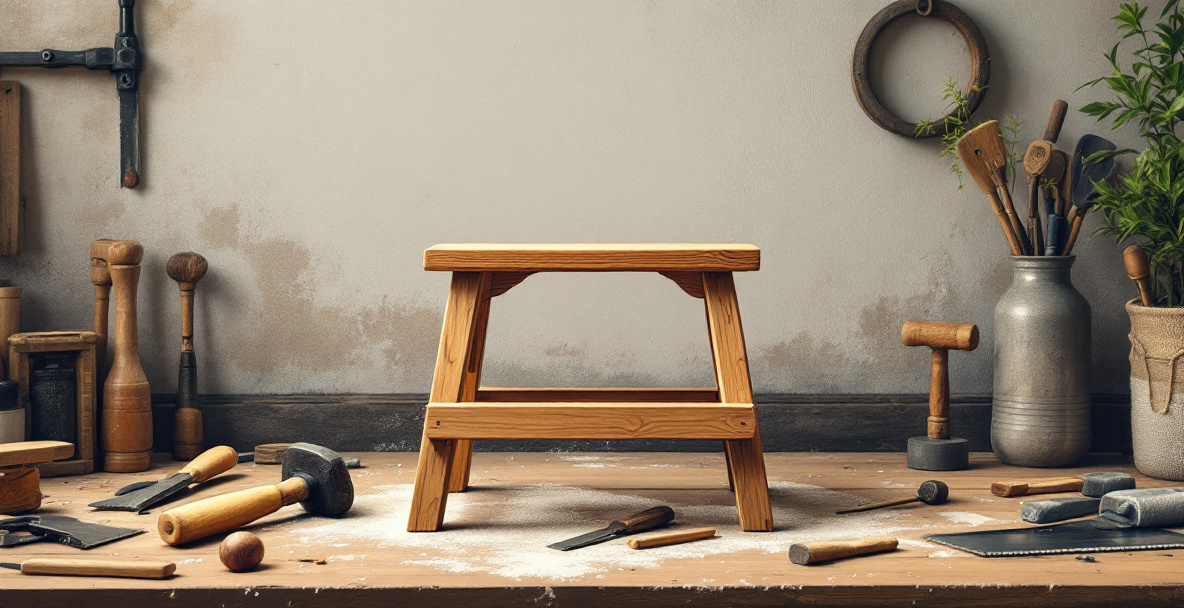
A step stool in particular introduces basic joinery without the stakes of a large furniture piece — if a joint is slightly off, it’s a minor fix, not a wasted week. Our step stool build guide walks through the whole process with this exact tool set, and our list of beginner projects has other options if a stool doesn’t suit your space or needs.
When mortise and tenon joints come into play
Mortise and tenon is usually the first “real” joint beginners attempt once a stool or crate feels manageable, because it only needs the chisel, mallet, saw, and marking tools already in the kit. No new purchase is required to try it. If you’re ready for that step, the chisel-and-mallet mortise guide breaks it down cut by cut.
A note on what this kit won’t do
A basic hand-tool starter kit will not make furniture-building fast, and it won’t replace a table saw for ripping long boards to width in minutes. Hand-tool work is slower, and some tasks — resawing thick stock, for instance — are genuinely harder without machines. That’s a real tradeoff, not a detail to gloss over.
What the kit does give you is quiet, low-cost, low-space entry into building real furniture, with tools that last decades if you take care of them. For a broader look at what beginner tool recommendations generally cover, Thisoldhouse is a reasonable starting reference alongside this checklist.
Frequently Asked Questions
Do I need a workbench before buying starter tools?
No, but you need something solid and stable to work against — a few clamps and a sturdy table can substitute temporarily. A proper bench helps a lot once you’re doing repeated joinery, but it’s not a prerequisite for your first project.
Can I start woodworking with only secondhand tools?
Yes. Most experienced hand-tool woodworkers assemble their kits from secondhand sources over time, and there’s no functional downside once a tool is cleaned, flattened, and sharpened correctly. The only real cost is the time spent restoring it.
What’s the single most important tool to buy first?
A jack plane, closely followed by a sharpening stone. The plane does the most work across the widest range of tasks, and without a way to keep it (and your chisels) sharp, nothing else in the kit performs well.
Is a power drill necessary for a hand-tool starter kit?
It’s not strictly necessary — a brace and bit does the same job without a cord or battery — but a cheap drill is one of the more forgivable power-tool exceptions for drilling pilot holes, since it saves time without compromising the hand-tool approach to joinery itself.
How long does it take to assemble a full starter kit?
Most hobbyists build a working kit over a few months, buying one or two tools at a time as projects demand them, rather than all at once. There’s no need to rush — a partial kit used well beats a full kit bought before you know what you need.