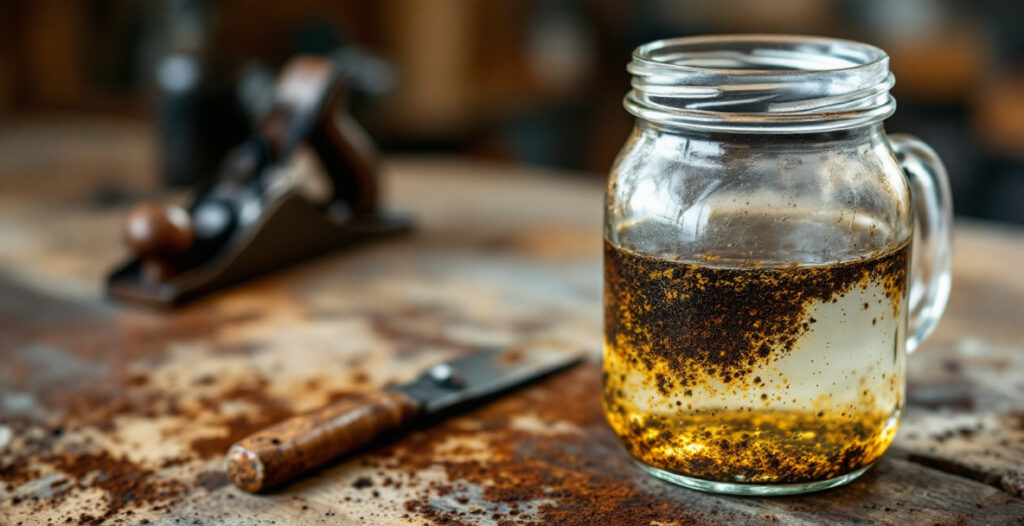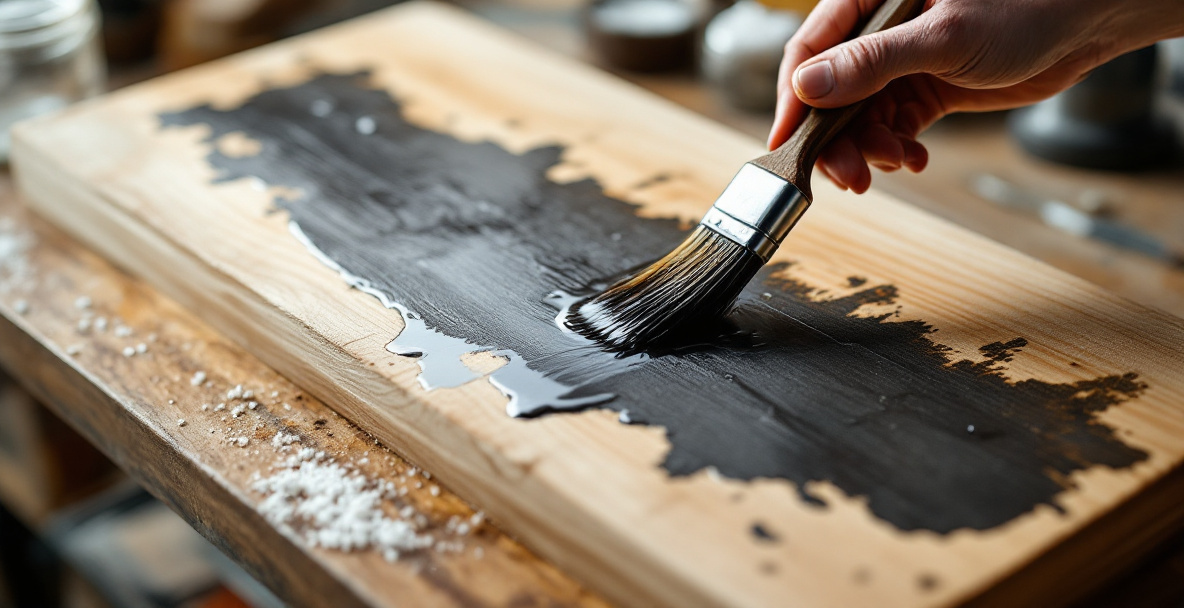
Oxalic acid for bleaching wood works by dissolving the dark mineral stains left by iron reacting with tannins — the gray-black spots you get from water sitting under a metal can, or the streaks left by old fasteners. Mix crystals with hot water, brush it onto the bare wood, let it sit, then rinse. It won’t lighten wood’s natural color evenly like a dye stripper would, but for rust stains, tannin stains, and general weathering, it’s the most reliable fix available to a hand-tool woodworker working without a spray booth or a cabinet full of specialty chemicals.
What Does Oxalic Acid Actually Do to Wood?
Oxalic acid removes discoloration caused by iron and tannin reacting together — it does not bleach the wood’s natural pigment the way chlorine bleach or a two-part wood bleach kit does. If your board is just naturally dark (walnut, for example), oxalic acid won’t do much for it.
Where it earns its keep is on stains that come from metal contact with wet wood. Nails, screws, staples, even the metal legs of a sawhorse left against damp lumber, all leave a bluish-black or gray mark where iron reacts with the wood’s natural tannins. That reaction product is what oxalic acid dissolves. It’s also the standard fix for the grayish weathering that outdoor furniture picks up after a season or two in the sun and rain, since UV breaks down lignin near the surface and leaves a similar dull, grayed appearance.
Woodworkers have used it this way for a long time — it’s a known enough trick that Popular Woodworking has written about it directly as a go-to for rust and tannin stains, not a general-purpose lightener.
Does It Work on Reclaimed and Weathered Lumber?
Yes, oxalic acid is one of the better options for cleaning up reclaimed or weathered lumber before you build with it. Old barn wood, fence boards, and reclaimed dimensional lumber almost always carry some combination of gray weathering and dark spotting from decades-old nails or hardware.
A single treatment usually pulls the gray back toward something close to the wood’s natural tone, though it won’t undo cupping, checking, or physical damage from years outside. If you’re sourcing rough lumber for a small project — a stool top, a shelf, a bench slab — treating it first means you’re not guessing what’s underneath the grime when you start planing.
How Do You Use Oxalic Acid to Bleach Wood?
Dissolve oxalic acid crystals in hot water — a common working ratio is about 3 to 4 tablespoons of crystals per cup of hot water, though exact concentration isn’t critical for this use. Brush the solution generously onto bare, sanded wood, keep it wet for 15 to 30 minutes, then rinse thoroughly with clean water and let it dry fully before doing anything else.
Here’s the process in more detail:
- Sand or plane the wood bare first. Oxalic acid only reaches wood it can actually touch. Old finish, wax, or dirt will block it. If you’re working entirely by hand, this is a good use for a hand plane before you get to finer sandpaper — it exposes fresh wood faster than sanding alone. If you haven’t used one before, it’s worth learning how to use a hand plane properly before you start on a piece you care about.
- Mix the solution in a plastic or glass container. Never metal — oxalic acid will react with it, which defeats the purpose.
- Apply with a synthetic brush, working with the grain, saturating the stained area evenly.
- Let it sit for 15 to 30 minutes. Stubborn iron stains sometimes need a second application once the first has dried.
- Rinse thoroughly with clean water, multiple times if needed, to stop the reaction and remove residue.
- Let the wood dry completely — at least 24 hours — before sanding, finishing, or applying any oil or stain.
The wood grain will likely raise slightly as it dries, since you’ve just soaked it with a water-based solution. A light pass with fine sandpaper afterward takes care of that.
How Long Should You Leave Oxalic Acid on Wood?
Fifteen to thirty minutes is the typical window, and you’ll usually see the stain visibly lighten within the first ten. If the discoloration is severe — old, deep-set iron stains — it’s better to let the wood dry, apply a second coat, and repeat rather than leaving the first application on for hours. Extended soaking mostly just wastes solution and slows down your project without lifting more stain.
Safety: What You Actually Need to Know
Oxalic acid is toxic if ingested and irritating to skin, eyes, and lungs, so wear rubber gloves and eye protection, and work in a ventilated space — outdoors or with a window open and a fan running. It’s sold as a powder in most hardware stores and home centers, often labeled as wood bleach or deck brightener, and it’s genuinely one of the milder acids used in woodworking, but “milder” doesn’t mean casual.
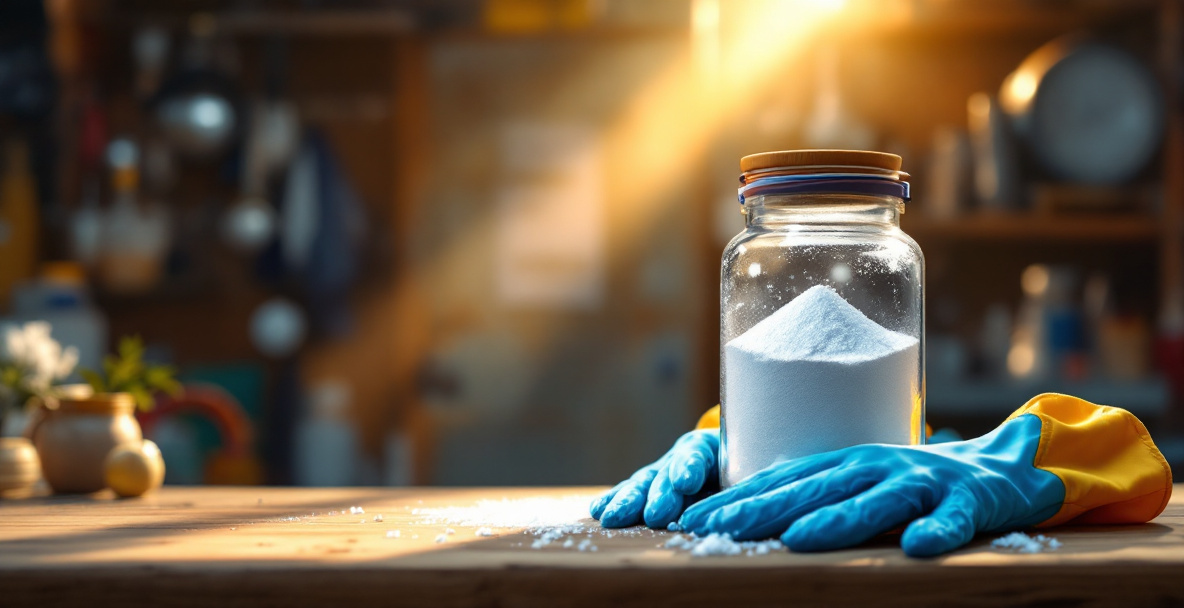
A few practical points:
- Keep it away from kids and pets, and store the dry crystals in a clearly labeled, sealed container.
- Don’t mix it with bleach or other cleaning chemicals — you don’t need to for this job, and combining acids and chlorine-based products is never a good idea.
- Neutralize your work surface afterward with a rinse of water, or a light baking soda solution if you’re working on something porous like concrete.
- Dispose of leftover solution according to your local regulations rather than pouring it straight down a drain in volume.
None of this requires a fume hood or a dedicated workspace. A shed with the door open and a bit of airflow is enough for the small quantities used on a single project.
Where to Get Oxalic Acid and What It Costs
Oxalic acid is sold cheaply at most hardware stores, often under names like “wood bleach” or “deck brightener,” usually for well under the price of a specialty two-part wood bleaching kit. It also shows up as the active ingredient in some rust and stain removers, so check the label rather than the product name.
Some woodworkers have also looked into making a rough substitute from plants like rhubarb leaves or wood sorrel, which naturally contain oxalic acid — there’s a discussion on this over at Permies if you’re curious. For a real project, though, buying the crystals is cheaper, faster, and far more predictable than extracting your own, and predictability matters when you’ve only got one weekend to work with.
Oxalic Acid vs. Other Wood Bleaching Options
Oxalic acid targets specific stains rather than lightening wood overall, which is the key difference between it and two-part chlorine-based wood bleaches. A two-part bleach (usually sodium hydroxide plus hydrogen peroxide) strips natural pigment from the entire board, which is what you want if you’re trying to lighten walnut toward maple, or erase a dye that’s already soaked in.
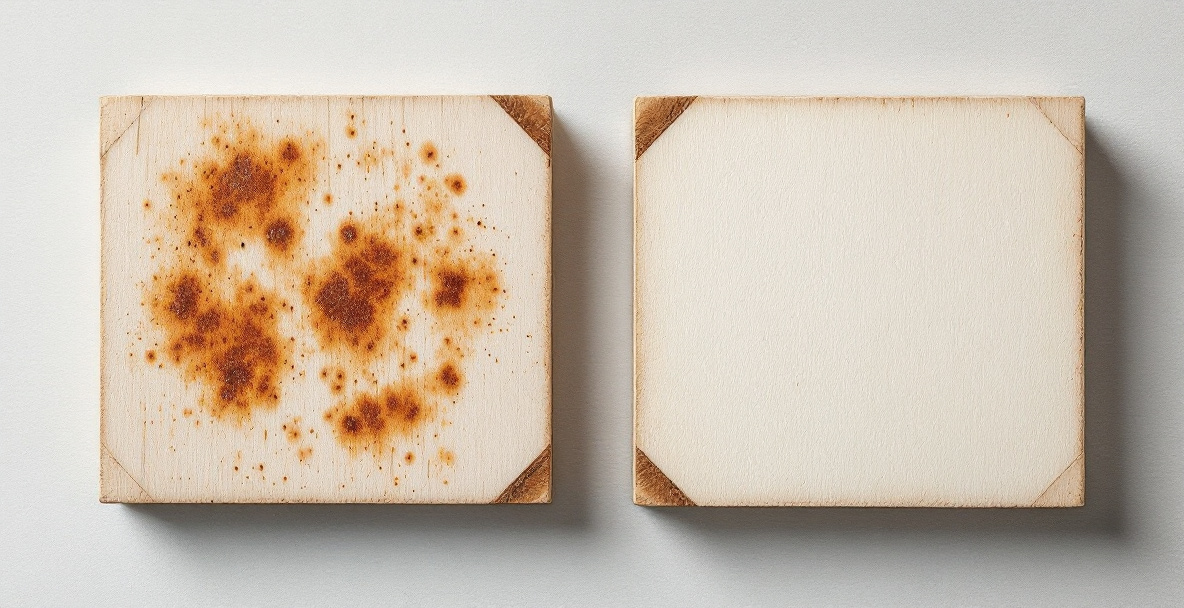
For most small-space, hand-tool projects, oxalic acid is the more useful of the two, simply because most of what you’re dealing with is inherited discoloration — old nail holes, water stains, sun graying — rather than a desire to change the wood’s actual color. It’s also less aggressive on the wood fiber and easier to manage without professional-grade ventilation.
Woodworkers discussing this on forums tend to land in the same place: it’s the right tool for rust and tannin, not for general lightening. Threads like Co and this one on a woodworking Facebook group cover a lot of real-world results from people trying it on old furniture and reclaimed stock, and the consensus lines up with what’s above.
After Bleaching: What Comes Next?
Once the wood is fully dry, it’s ready for finishing exactly as if it were never stained — sand it smooth, and apply whatever oil or finish you’d planned for the piece. Oxalic acid doesn’t leave a residue that interferes with oils, waxes, or film finishes once it’s been rinsed and dried properly.
If the piece is headed outdoors again, treating stains now doesn’t stop future weathering — sun and moisture will start greying the surface again eventually, and periodic reapplication is normal maintenance rather than a sign you did something wrong the first time. If you’re choosing wood for a piece before you’ve even built it, it’s worth reading up on which species hold up best outdoors in the first place, since some woods barely need this treatment at all.
Frequently Asked Questions
Can oxalic acid remove old finish along with the stain?
No. Oxalic acid bleaches stains in bare wood; it does nothing to paint, varnish, or old film finishes. You need to strip or sand off any existing finish first so the acid can reach the wood underneath.
Will oxalic acid change the natural color of unstained wood?
Barely, if at all. It’s targeted at the dark compounds formed by iron and tannin, not at the wood’s own pigment, so untouched areas of a board will look essentially the same after treatment.
Is oxalic acid safe to use on furniture that will hold food?
It’s not recommended for cutting boards or other food-contact surfaces without extremely thorough rinsing and drying, since it’s a mild acid. For general furniture — tables, chairs, stools — it’s fine once rinsed and fully dried before finishing.
How many times can you apply oxalic acid before it damages the wood?
Two or three applications is typical for stubborn stains, and it’s unusual to need more than that. Repeated heavy use can slightly soften surface fibers, so if a stain isn’t lifting after a few tries, it may be set too deep to remove and sanding it out may be the better option.
Does oxalic acid work on all wood species equally?
Reasonably well on most, but results vary with tannin content. High-tannin woods like oak show iron staining more dramatically and respond well to treatment, while low-tannin woods like pine may show less staining to begin with and correspondingly less dramatic results.